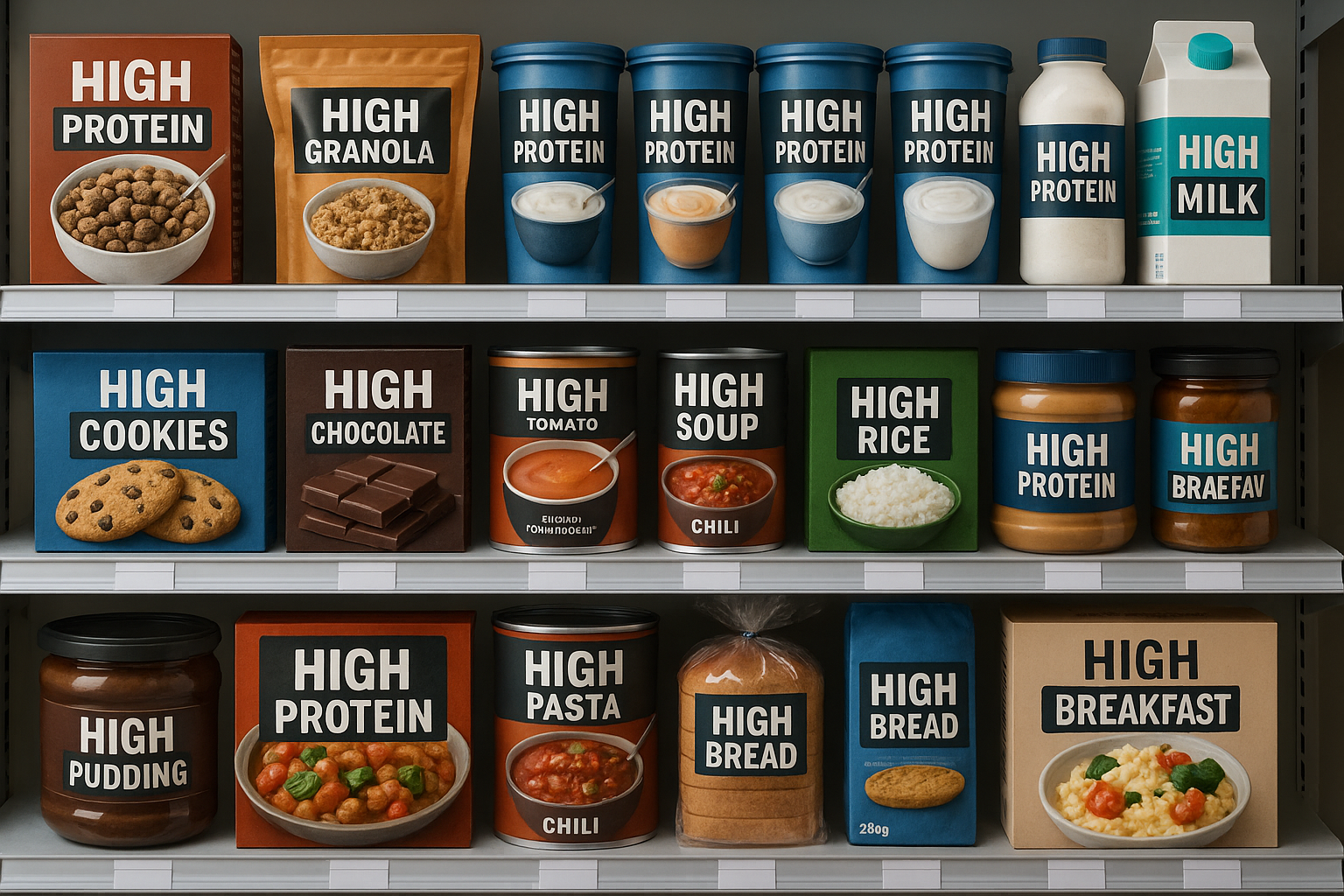
These days, everything is high-protein.
Cereal? High protein.
Yogurt? High protein.
Chocolate bars? Also high protein.
There’s probably a high-protein jellybean out there.
But here’s the problem: most of it is marketing hype — not nutritional value.
So let’s clear it up.
Just because a label screams “HIGH PROTEIN” doesn’t mean it’s actually doing anything useful for your body.
Today, we call BS — and we show you how to spot the real deal.
The Legal Loophole No One Talks About
In South Africa (and many other countries), a brand can slap “HIGH PROTEIN” on a label if it has just 10g of protein per 100g.
That’s it.
Just 10% protein content… and it qualifies.
You could eat 90% junk and 10% protein, and the product is still legally allowed to scream “HIGH PROTEIN” in bold gold lettering.
It’s clever marketing — not clean nutrition.
Protein Math: The Cheat Code
You don’t need a degree to know if something is actually high protein. You just need this one cheat:
Do the Protein Percentage Test:
Take the grams of protein per 100g, and boom — that’s the percentage.
-
- 10g protein per 100g = 10% protein (meh)
-
- 25g protein per 100g = 25% protein (not bad)
-
- 80g protein per 100g = 80% protein (that’s elite)
Now do this next time you’re looking at “protein bars,” “protein cereal,” or “protein chips.” You might be surprised how little protein they actually contain.
 What You Should Actually Look For
Here’s how to separate the snack fuel from the snack fluff:
1. Always Check Per 100g
“Per serving” is marketing gymnastics.
Serving sizes are often tiny, misleading, and designed to make the product look better.
2. Aim for 25%+
That’s 25g of protein per 100g of product.
Anything less? It’s probably pretending.
3. Watch the Sugar
Some “protein” products pack in 15g+ of sugar — that’s basically dessert in disguise.
4. Scan the Ingredients
If sugar, syrup, or flour are in the top 3 ingredients — it’s a no from us.
Why This Matters (Especially If You’re…)
-
- Trying to lose fat or tone up
-
- Recovering from surgery
-
- Cutting sugar and carbs
-
- Living dairy-free or gluten-free
-
- Feeding your family clean fuel
-
- Just tired of being duped by BS packaging
Protein is powerful. But only when it’s actually there — in decent quantities — without the crap.
Bonus: High-Protein Hitlist
Want to know what’s actually high protein?
Here’s a quick cheat sheet:
| Food/Product | Protein per 100g | % Protein |
| Egg White Powder | 80g | 80%  |
| Chicken Breast | 31g | 31% |
| Whey Protein Powder | 70–90g | 70–90% |
| Peanut Butter | 25g | 25% |
| “High Protein” Bread | 12g | 12%  |
| “Protein” Chocolate | 8g | 8% |
Moral of the story: Read the back. Don’t trust the front.
This Is Bigger Than Just Snacks
If we want better food options on the shelves, we have to demand better. That starts with education.
So whether you’re a seasoned label-reading ninja or just getting started — you’re part of the clean protein movement now.
Let’s raise the standard. For ourselves. For our families. For the noobs just starting out.
 Want a Free Protein Calculator?
We built a no-fluff Protein % Calculator to help you spot the real high-protein foods from the snack aisle pretenders.
Perfect for shopping, label decoding, or proving your cousin’s “protein cereal” is basically cardboard and vibes.
No downloads. No gimmicks. Just clean math — and maybe a little ego check.